Product Specifications
| Specification | Details |
|---|---|
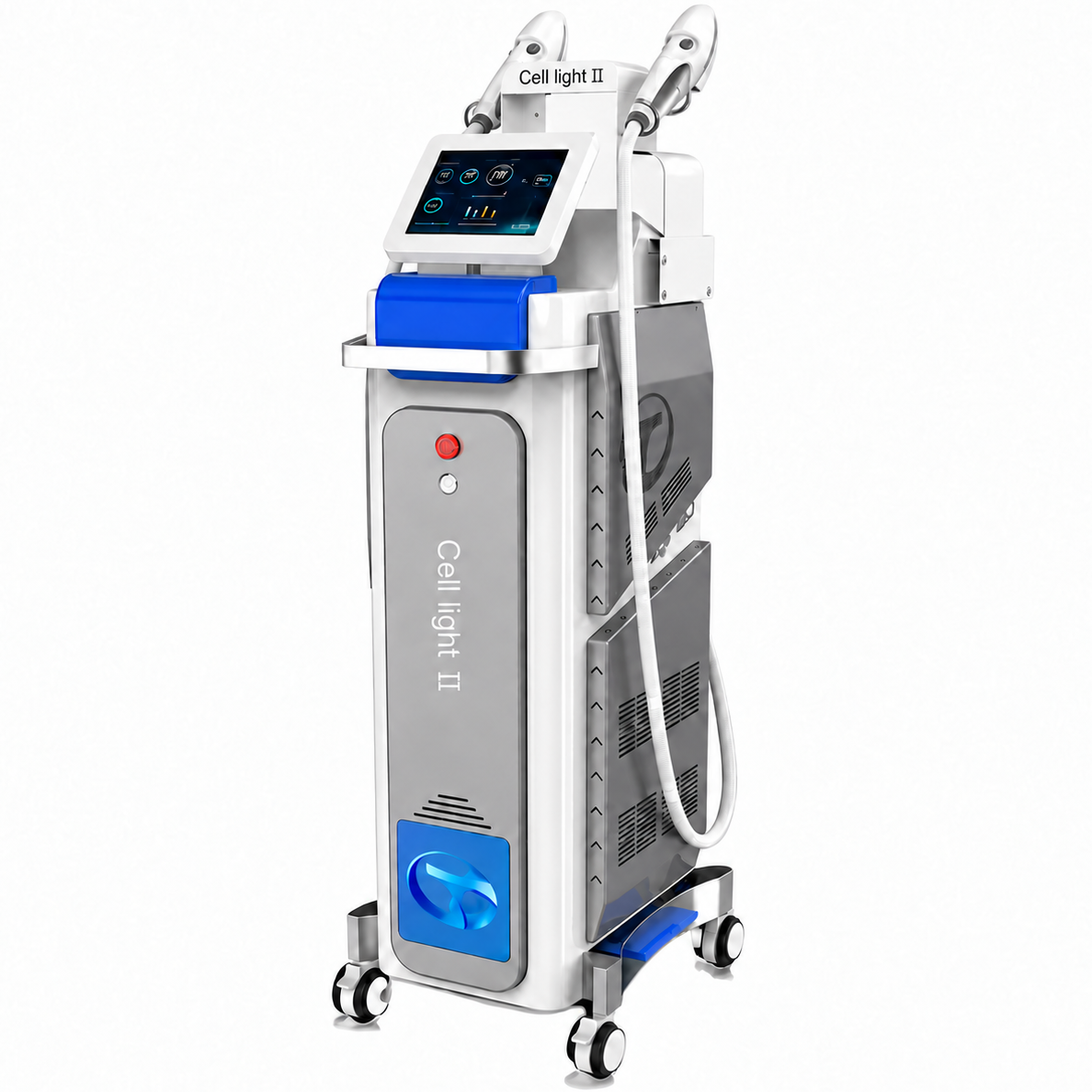
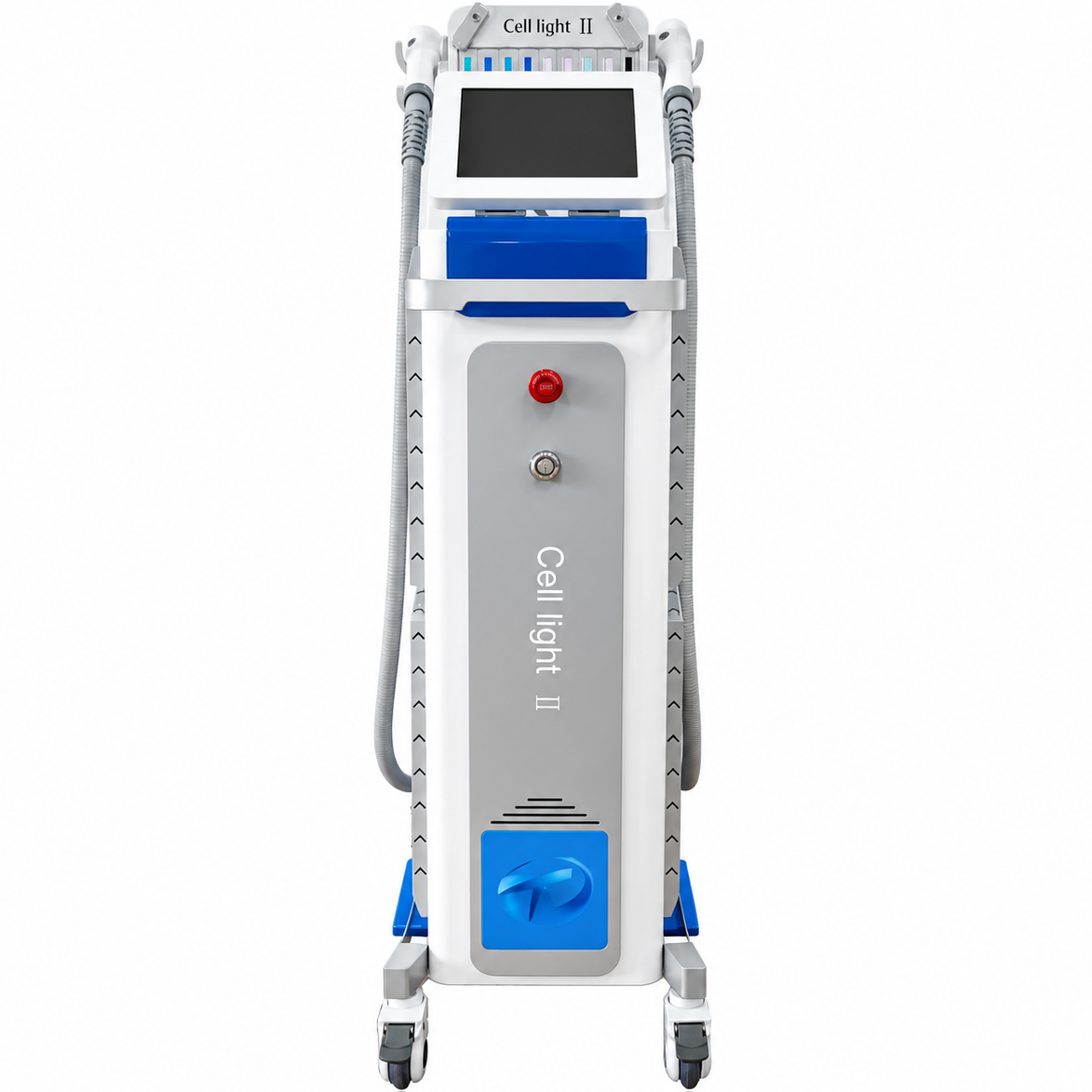
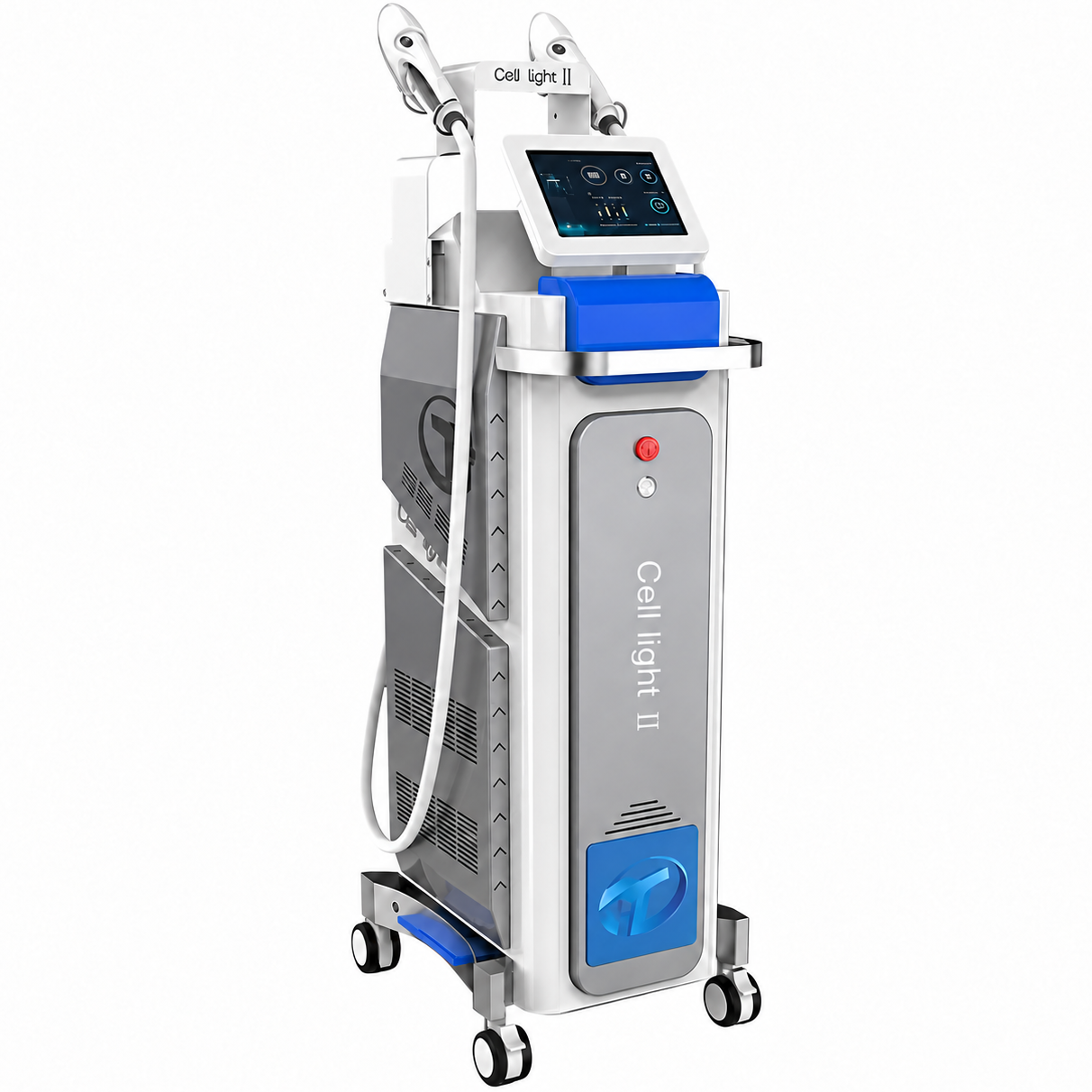
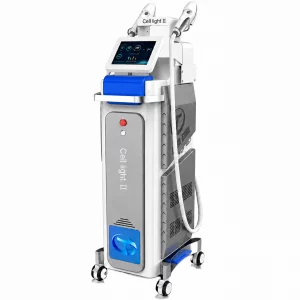
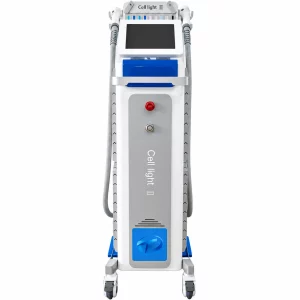
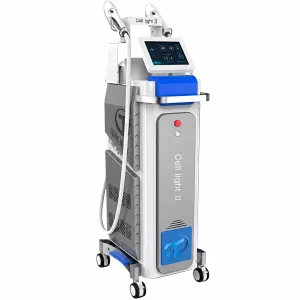
| Model | Cell Light II |
| Voltage | AC 110–220 V |
| Spectral Range | 400–1400 nm |
| Power Supply Module Output Power | 2,000 W |
| Power Supply Module Single-Pulse Energy | 1,600 J |
| Repetition Rate | 2 pulses per second |
| Maximum Pulse Width | 25 ms |
| Power Supply Module Output Voltage | Adjustable, 200–400 V |
| Light Source | Pulsed xenon lamp with 50–100 mm electrode spacing |
| Package Dimensions | 59 × 53 × 149 cm / 23.2 × 20.9 × 58.7 in |
| Gross Weight | 60 kg / 132.3 lb |
What Skin Concerns Does It Address?
Pigmentation & Uneven Skin Tone
Targets visible freckles, sunspots, age spots, and dark post-acne marks to help reveal a brighter, more even-looking complexion.
Skin Rejuvenation & Texture
Addresses visible signs of photoaging, including fine lines, dullness, and uneven texture, for smoother, firmer-looking skin.
Facial Redness & Visible Vessels
Dedicated vascular filter options support targeted treatments for selected superficial blood vessels and visible facial redness.
Acne-Focused Care
The dedicated ACNE dual-band filter supports professional treatments for acne-prone skin and related complexion concerns.
Unwanted Hair Reduction
Selected filters deliver light energy that targets pigment in hair follicles, helping reduce unwanted hair growth over a series of treatments.
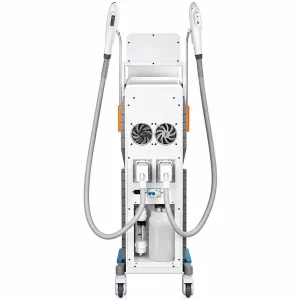
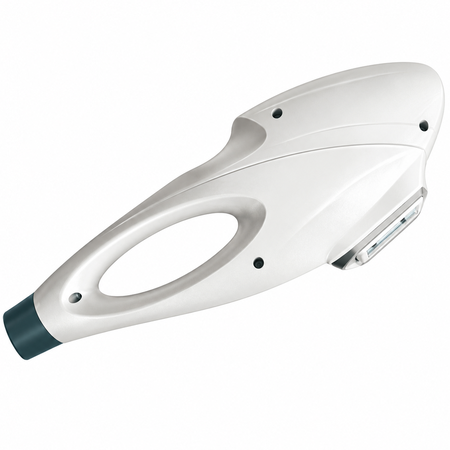
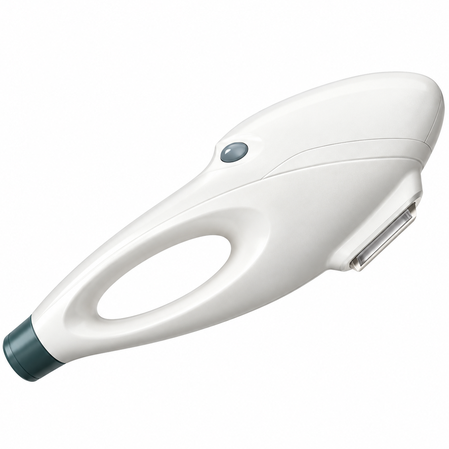
Handpiece Overview
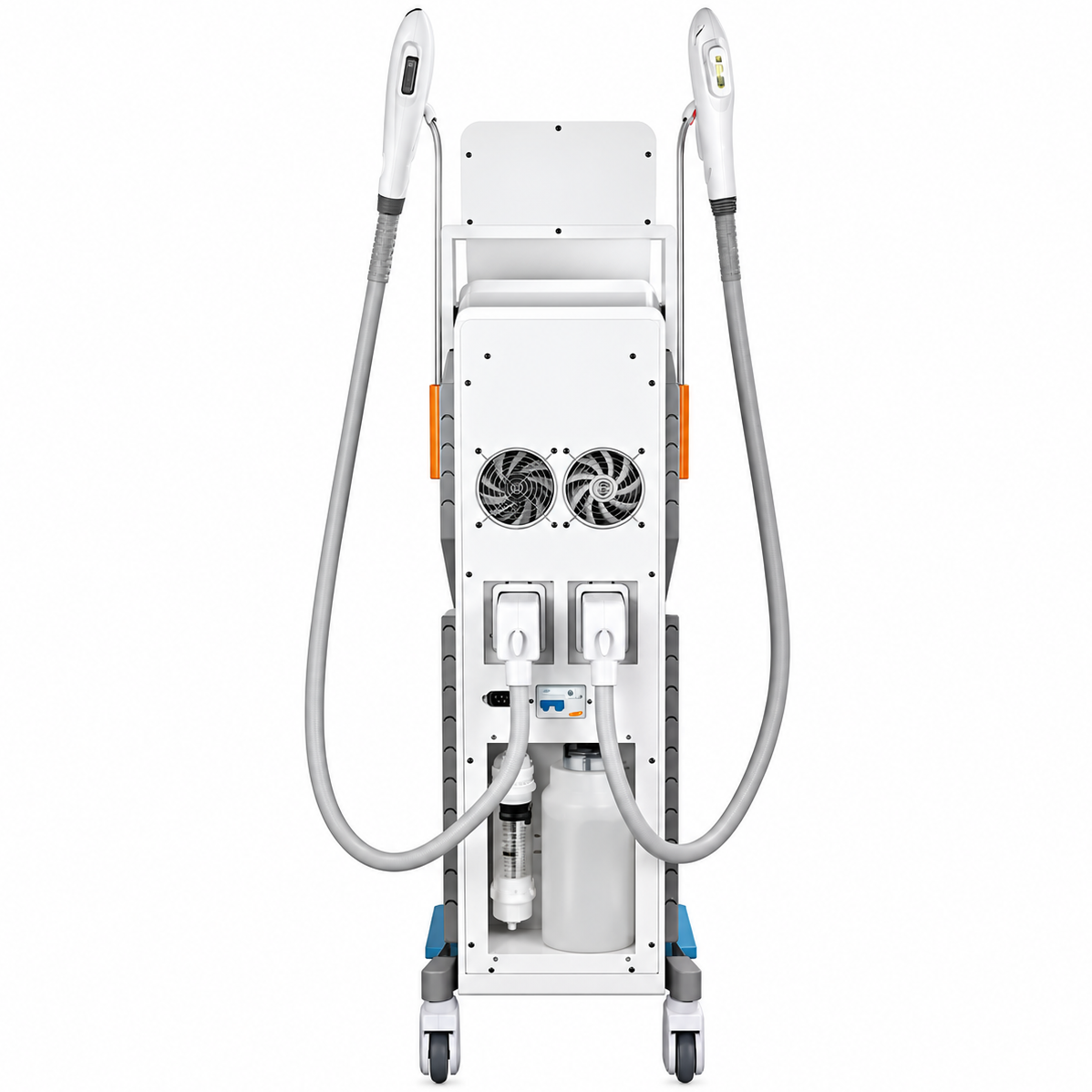
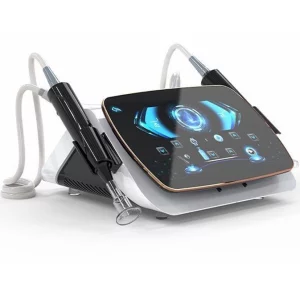
Cell Light Handpiece
Features interchangeable filters for targeted treatments addressing visible pigmentation, facial redness, acne-related concerns, and unwanted hair.
Milk Light Handpiece
Requires no attachment changes and focuses on skin rejuvenation. Designed to stimulate collagen renewal for firmer-looking skin, softer fine lines, less visible pores, and a brighter complexion. Ideal for clients concerned about skin laxity, fine lines, and visible signs of aging.
Filter Guide
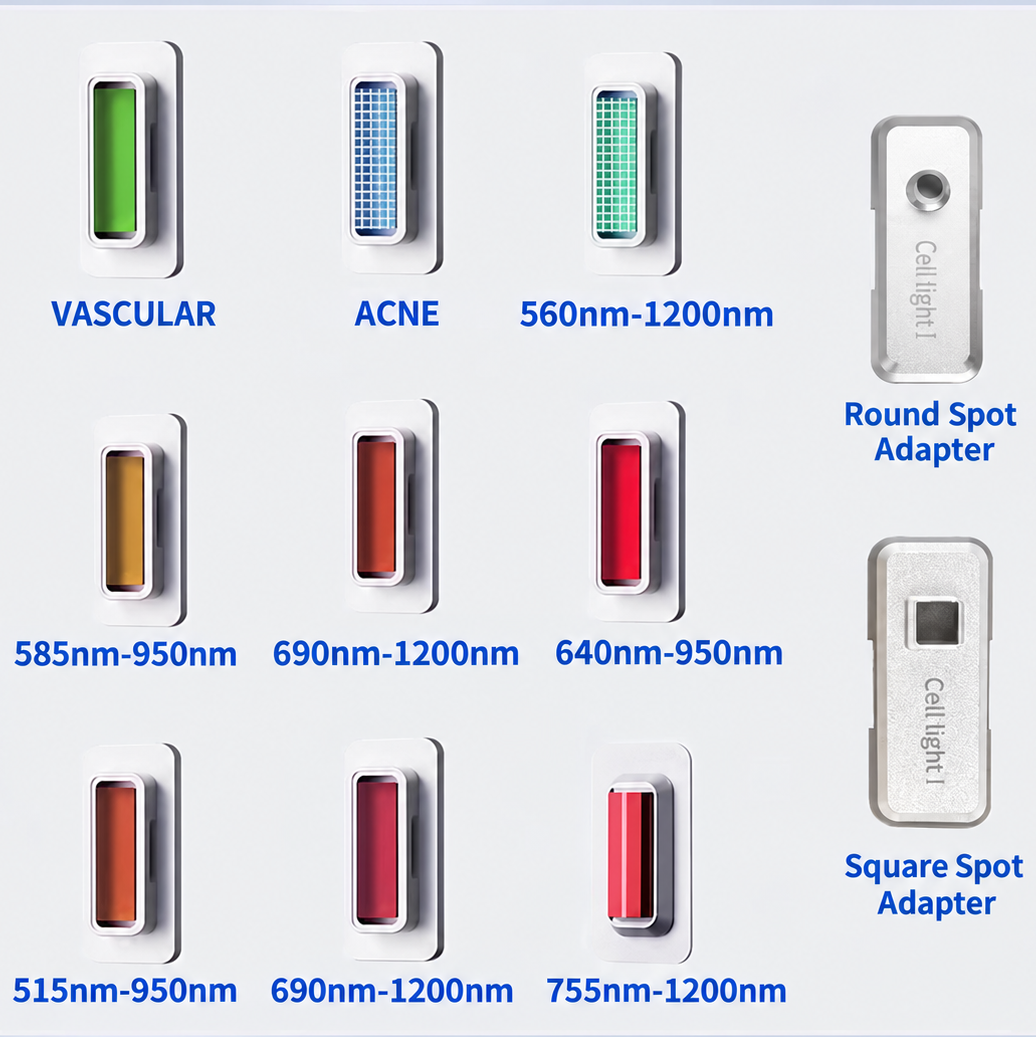
9 Filters + 2 Spot Adapters for Customized Photofacial Treatments
The Cell Light II combines a 400–1400 nm light spectrum with nine interchangeable filters and two spot adapters. Select different treatment bands and spot shapes to customize photofacial services for visible pigmentation, redness, uneven skin tone, and other treatment goals.
| Filter Band | Treatment Focus |
|---|---|
| 515–950 nm | Targets the appearance of freckles, age spots, sunspots, and dark post-acne marks. |
| 560–1200 nm | Supports skin rejuvenation and a brighter, more even-looking complexion, with a focus on visible sun damage and superficial pigmentation. |
| 585–950 nm | Focuses on visible facial redness and superficial vascular concerns. |
| 640–950 nm | Provides an additional filter option for selected pigmentation and uneven-tone treatments. |
| 690–1200 nm | Supports treatments focused on early signs of aging, skin texture, and the appearance of enlarged pores. |
| 755–1400 nm | Supports treatments focused on firmer-looking skin and improved skin texture. |
| ACNE: 400–600 nm & 800–1200 nm | A dedicated dual-band filter for acne-focused applications. |

| VASCULAR: 530–650 nm & 900–1200 nm | A dedicated dual-band filter for visible redness and small superficial blood vessels. |
| 615–1200 nm | Provides an additional treatment band for selected hair-reduction applications, with a focus on reducing inflammation and supporting skin metabolism. |
Round and Square Spot Adapters
The round spot adapter is designed for localized areas around the lips and eyes, including lip pigmentation and freckles around the eyes. The square spot adapter is designed for areas such as the forehead, upper lip, and nose, including sunspots and acne on the forehead, freckles, sunspots, and blackheads on the bridge of the nose, and unwanted upper-lip hair.
Client Suitability & Treatment Planning
Client Screening
Treatment is not suitable for:
- Pregnant clients.
- Clients with photosensitivity or those taking photosensitizing medications.
- Clients with highly reactive skin or a history of severe allergic reactions.
- Clients with epilepsy, a history of keloid formation, or diabetes.
- Clients who cannot avoid sun exposure during the treatment course.
Do not treat the upper eyelids or areas with open wounds. Recent use of active skincare products, cosmetic procedures, and current medications should be reviewed before scheduling treatment.
Treatment Schedule
Plan a series of sessions based on the treatment goal and the skin’s response.
| Treatment Goal | Typical Session Interval | Initial Treatment Course |
|---|---|---|
| Skin Rejuvenation | Every 30–45 days | Approximately 4 sessions |
| Hair Reduction | Every 28–35 days | Approximately 4–6 sessions |
| Acne-Focused Treatments | Approximately every 3 weeks | Approximately 4–6 sessions |
| Pigmentation Treatments | Approximately every 3–4 weeks | Approximately 4–6 sessions |
Session timing and the total number of treatments may vary with the treatment area, skin condition, and recovery between sessions.
Before & After Treatment
Before Treatment
- Avoid tanning beds and intentional sun exposure for at least two weeks.
- Avoid abrasive scrubs for three days before the session.
- Remove makeup and cleanse the treatment area.
- Disclose medications, active skincare products, and recent cosmetic treatments during the consultation.
After Treatment
- Apply broad-spectrum SPF 30 or higher and limit sun exposure.
- Use gentle, moisturizing skincare.
- Avoid hot baths, saunas, and steam rooms for seven days.
- Avoid whitening products, exfoliants, and other irritating active skincare until the skin has recovered.
- Do not pick, scratch, or forcibly remove any crusting.
Temporary redness may occur. Pigmented spots may temporarily darken before gradually fading.
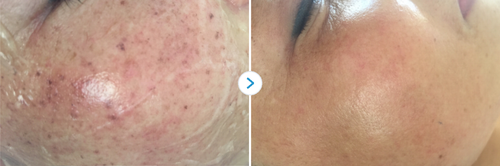
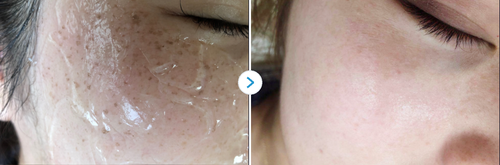
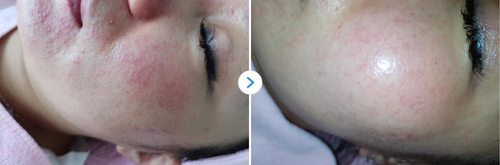
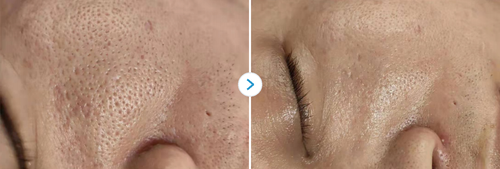
Before & After Results
What’s Included
- Cell Light Handpiece × 1
- Milk Light Handpiece × 1
- Funnel Kit × 1
- Protective Eye Shields × 1
- Power Cord × 1
- Safety Goggles
FAQ
Clients may feel warmth or a brief snapping sensation during treatment. Integrated cooling and coupling gel help improve comfort, while the sensation varies with the treatment area, settings, and individual sensitivity.
After each session, remove residual gel from the treatment window with a soft, damp cloth, then dry it thoroughly. Keep the optical surface clean and free of scratches. Do not immerse the handpiece, use abrasive cleaners, or sterilize it at high temperatures.
Check the cooling-water level and condition weekly, top up as needed, and replace the water approximately once a month. Use purified or distilled water. Drain the cooling system before transportation or extended storage.